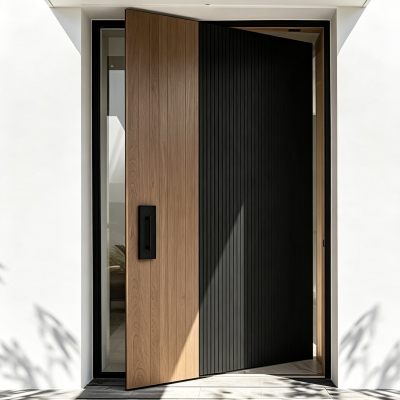
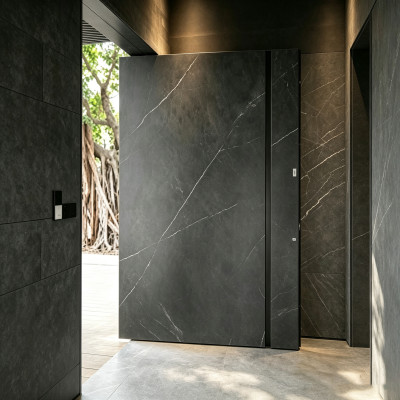
What Is an Aluminum Pivot Door? Complete Beginner's Guide
What Is an Aluminum Pivot Door? Complete Beginner's Guide
An aluminum pivot door is a door that rotates on a vertical axis located away from the door's edge — typically at the center or offset from the jamb — instead of hanging from side-mounted hinges. This single mechanical difference unlocks a completely different class of door: oversized panels, ultra-slim frames, dramatic architectural statements, and a smooth, effortless opening motion that hinged doors simply cannot achieve. Because the pivot hardware transfers weight through the floor and ceiling rather than through the door frame's side jambs, an aluminum pivot door can be far larger and heavier than a conventional door of the same material. In this beginner's guide, you will learn exactly how pivot doors work, how they differ from hinged doors, what sizes are possible, which aluminum profiles and glass configurations are used, the pros and cons you need to weigh, and how to choose a manufacturer you can trust — with the answers up front.
Quick Answer: The Door That Rotates on a Central Axis
An aluminum pivot door is a door whose leaf rotates around a pivot point — usually the door's vertical centerline or a point offset toward the jamb — using top and bottom pivot hardware mounted into the floor and header, rather than side hinges. The leaf can swing through 180 degrees in either direction, and because the hardware carries the load through the floor plate and ceiling bracket, the panel can be much taller, wider, and heavier than a standard hinged door. Landran Door manufactures aluminum pivot doors with high-strength 6063 aluminum profiles, a certified load capacity of up to 500kg per leaf, and customizable sizes for villa and commercial entrances.

How a Pivot Door Works: The Mechanism Explained
The core difference between a pivot door and a hinged door is where the axis of rotation sits. A standard hinged door rotates on hinges mounted to the side jamb; the entire weight of the leaf hangs off those hinges, creating enormous lever-arm forces that grow with the size of the door. A pivot door, by contrast, rotates on a pivot assembly that is split between a floor pivot (a heavy-duty bearing plate recessed into the finished floor) and a top pivot (a bracket fixed to the header or ceiling). The door leaf is clamped between these two points, and the weight is transferred straight down through the floor plate into the building structure — not sideways into the jamb.
There are two common axis positions:
- Center pivot: the axis runs through the middle of the leaf, so the door rotates like a revolving plane. Each side of the door describes a half-circle, making the sweep area symmetrical. This configuration is often chosen for very wide leaves because the weight is split evenly.
- Offset pivot: the axis sits closer to one edge (typically 1/4 to 1/3 of the leaf width from the edge). The door swings almost like a hinged door but with much better load distribution, and it creates that dramatic "pivot" motion — opening past the wall plane to nearly 180 degrees.
Because the hardware carries the load at only two points, the door frame itself can remain remarkably slim. This is why pivot doors are the standard choice for modern architecture: they allow 2.4m to 3m tall leaves that look like a single uninterrupted glass-and-aluminum plane.
Pivot Door vs Hinged Door: Key Differences
| Feature | Aluminum Pivot Door | Aluminum Hinged Door |
|---|---|---|
| Rotation axis | Center or offset pivot, floor + header hardware | Side hinges mounted to the jamb |
| Maximum leaf height | 2.4m – 3m+ (up to 3m with reinforced profiles) | Typically 2.0m – 2.4m |
| Maximum leaf weight | Up to 500kg per leaf with rated pivot hardware | Usually 80kg – 150kg per leaf |
| Frame thickness | Slim frames possible; weight carried by pivot | Heavier frames needed to carry hinge load |
| Swing range | Up to 180 degrees in both directions | Typically 90 – 110 degrees |
| Opening feel | Effortless, heavy-weighted "luxury" motion | Standard hinge action |
| Floor requirement | Floor pivot plate must be recessed into the slab | None beyond standard threshold |
| Cost | Higher — pivot hardware + engineering | Lower — standard production |
If you want an entry door that makes a statement — a full-height glass panel, a massive double-leaf opening, or a door that people notice — the pivot configuration is the way to go. If you simply need a dependable, cost-effective entrance, a hinged door will do the job. Many luxury villas use a combination: a pivot door at the main entrance and hinged doors elsewhere.
What Sizes and Weights Are Possible?
Standard pivot door sizes vary by manufacturer, but here are the ranges you should expect from a quality aluminum pivot door supplier:
- Leaf height: 2.4m is common; 2.6m – 3.0m is standard for luxury villas; 3m+ requires structural engineering review.
- Leaf width: 900mm – 1,200mm for single leaves; double-leaf systems can span 2.0m – 3.0m total.
- Leaf weight: most residential pivot systems are rated 100kg – 300kg; high-capacity systems reach 400kg – 500kg per leaf.
- Profile wall thickness: 2.0mm – 3.0mm for load-bearing pivot doors (heavier than standard window profiles).
- Glass: typically 6mm + 3mm laminated, or 5mm + 5mm insulated glass for thermal performance.
Landran Door's P-series pivot doors are available in customized sizes and are rated up to 500kg per leaf, using 6063 aluminum profiles with flame-retardant polyurethane filling. When you request a quote, specify your opening height, width, weight of the glass you plan to install, and whether the door is interior or exterior — the manufacturer will match the pivot hardware rating and profile thickness accordingly.
Why Aluminum? Materials and Profiles Explained
Aluminum is the dominant material for pivot doors for three reasons: strength-to-weight ratio, corrosion resistance, and design freedom. The most common alloy is 6063 aluminum, often supplied in the T5 temper, which offers an excellent combination of extrudability, surface finish quality, and structural strength. For load-bearing pivot leaves, manufacturers specify wall thicknesses of 2.0mm to 3.0mm and may add internal reinforcement where the pivot brackets attach.
Surface finishes matter just as much as the alloy:
- Powder coating: the most common finish, available in thousands of RAL colors. Fluorocarbon (PVDF) powder coatings provide the best weather resistance for exterior doors.
- Anodizing: creates a hard, corrosion-resistant oxide layer; excellent for coastal environments.
- Wood-grain finishes: digital wood-grain transfer gives aluminum the look of timber without the maintenance — very popular for villa doors.
- Dual-tone finishes: different colors inside and out, e.g. grey outside, wood grain inside.
Landran Door applies fluorocarbon powder coating to its pivot doors for outstanding weather resistance, and offers wood-grain finishes such as Polar Black and Grey Wood Grain for villa entrances.
Glass Configurations for Pivot Doors
The glass is the largest visual surface of a pivot door, so its specification is critical. Common options include:
- Tempered glass (single): 6mm – 12mm toughened glass for interior pivot doors or full-glass panels.
- Laminated glass: two layers bonded with PVB — stays in place if broken, better for safety and security.
- Insulated glass (double glazing): two panes with a spacer, e.g. 5mm + 12A + 5mm or 6mm + 15A + 6mm, for thermal and acoustic performance.
- Low-E coatings: reduce heat transfer and protect interiors from UV fading.
- Privacy and decorative glass: frosted, acid-etched, or patterned glass for bathrooms and street-facing entrances.
For an exterior entry pivot door, industry practice is laminated or insulated glass with a Low-E coating, in a thickness matched to the leaf size. For a 3m tall leaf, consult the manufacturer — the glass weight directly affects the required pivot hardware rating.
Advantages and Disadvantages of Aluminum Pivot Doors
Advantages
- Architectural impact: oversized, full-height leaves create a striking entrance that hinged doors cannot match.
- Slim sightlines: because the pivot carries the load, frames stay slim and the glass area is maximized.
- Effortless operation: a well-balanced pivot door opens with surprising ease, even at 100kg+.
- 180-degree swing: the leaf can open flat against the wall, maximizing the clear opening.
- Durability: aluminum won't warp, rot, or swell like timber, and modern coatings last decades.
- Customization: sizes, colors, glass, and hardware can all be tailored to the project.
Disadvantages
- Higher cost: pivot hardware, engineering, and installation are more expensive than standard hinged doors.
- Floor work required: the bottom pivot plate must be recessed into the floor slab — plan for it before flooring is laid.
- Structural planning: the header and floor must be engineered to carry the concentrated loads at the pivot points.
- Installation complexity: precise alignment of top and bottom pivots is critical; not every contractor has pivot door experience.
- Weather sealing: a pivoting leaf needs carefully designed perimeter gaskets to maintain weather resistance in exterior applications.
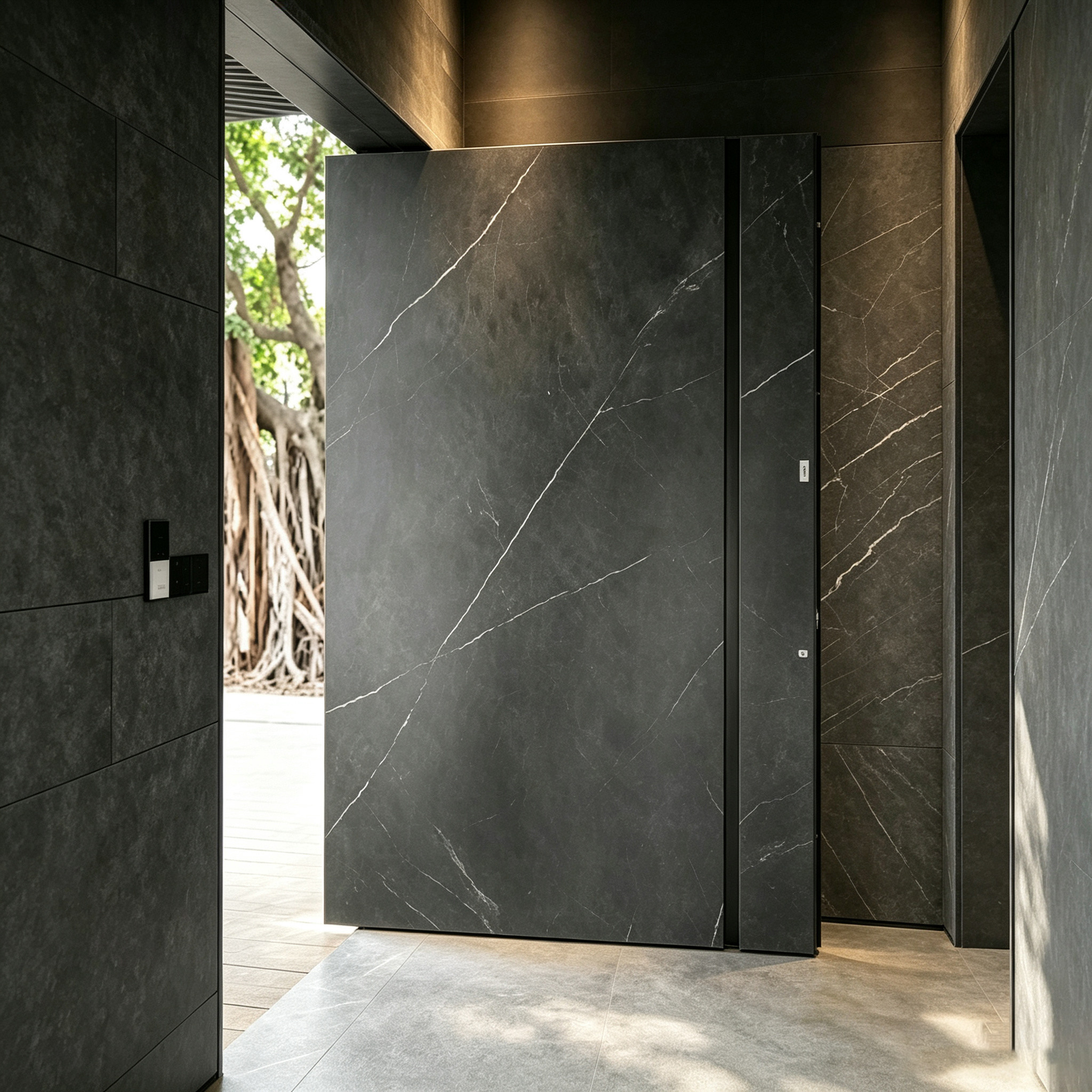
Pivot Door Terminology: Terms You Will Hear From Suppliers
When you start discussing pivot doors with architects or manufacturers, you will encounter a handful of specific terms. Knowing them will help you ask the right questions and compare quotes accurately:
- Pivot set / pivot assembly: the complete hardware kit — floor pivot plate, top pivot bracket, and pivot spindles — that carries the door's weight.
- Floor pivot: the load-bearing bearing mechanism recessed into the floor, on which the bottom of the leaf rotates.
- Top pivot / header bracket: the ceiling- or header-mounted guide that holds the top of the leaf and keeps the axis vertical.
- Offset pivot vs center pivot: offset places the axis near one edge of the leaf; center places it mid-leaf. Offset is more common for entry doors.
- Leaf: the moving part of the door — the framed glass panel that swings.
- Dead load: the total static weight the pivot hardware must support, including the frame and glass.
- Sweep / swing arc: the space the leaf covers as it rotates; a 180-degree sweep means the door opens flat.
- Threshold: the bottom seal strip or sill the door closes against; low-profile thresholds are preferred for barrier-free entry.
Where Pivot Doors Are Used
Aluminum pivot doors are most commonly found in:
- Luxury villas and private residences — as the main entrance or a statement double-leaf door.
- Modern office lobbies — full-height pivot doors communicate a contemporary brand.
- Retail storefronts — the 180-degree opening creates a wide, welcoming entrance.
- Hotels and resorts — grand entrance doors and balcony doors with floor-to-ceiling glass.
- Showrooms and galleries — where the door itself is part of the design.
- Interior partitions — large pivot doors dividing living and dining areas.
For residential buyers, the sweet spot is a 2.4m to 3.0m tall entrance door with insulated glass. For commercial projects, double-leaf pivot systems or pivot doors with integrated access control are popular.
Installation and Structural Requirements (What to Know Before You Buy)
Before you order a pivot door, verify these structural points with your contractor:
- Floor construction: the bottom pivot plate must be recessed into the slab or subfloor and anchored to solid concrete. Leave the installation pocket open during floor pouring.
- Header capacity: the top pivot bracket transfers some load into the header; confirm the lintel or steel beam above the opening can carry it.
- Wall alignment: the pivot axis must be perfectly vertical — even 2mm of misalignment causes binding over a 3m leaf.
- Opening clearance: allow swing clearance for the full 180-degree arc, including handles, walls, and adjacent furniture.
- Weather sealing: for exterior doors, specify perimeter gaskets and a low threshold to manage water and drafts.
Landran Door provides installation guidance with every pivot door order, and its 30–45 day production cycle allows time for site preparation to be completed before delivery.
How Much Do Aluminum Pivot Doors Cost?
Pricing varies widely with size, hardware rating, glass specification, and finish, but these rough ranges give first-time buyers a frame of reference:
| Configuration | Typical Leaf Size | Indicative Price Range (per door) |
|---|---|---|
| Standard aluminum pivot door | 1.0m x 2.4m | $1,200 – $2,500 |
| Premium pivot door with wood-grain finish | 1.2m x 2.6m | $2,000 – $4,000 |
| Large-format pivot door (heavy-duty hardware) | 1.5m x 3.0m, 300kg+ rating | $3,500 – $7,000+ |
| Double-leaf pivot system | 2.4m – 3.0m total width | $5,000 – $12,000+ |
Three factors drive the price more than anything else: the pivot hardware rating (a 500kg-rated pivot set costs several times a 150kg set), the glass specification (large tempered or insulated panels are expensive, and laminated or Low-E options add more), and the finish (fluorocarbon and wood-grain finishes cost more than standard powder coat). Remember that the quoted door price usually excludes installation, structural work, and shipping — ask your supplier for a full breakdown so there are no surprises.
How to Choose a Pivot Door Manufacturer
Because pivot doors depend on engineering quality, the manufacturer matters more than for a standard door. Ask these questions when evaluating suppliers:
- What is the certified load capacity? A serious manufacturer will state a rating (e.g. up to 500kg) and size their pivot hardware accordingly.
- What alloy and wall thickness do you use? Look for 6063-T5 or better, with 2.0mm+ wall thickness on load-bearing profiles.
- Do you offer custom sizes and finishes? Your opening will not match a standard size; customization is essential.
- What are the production and lead times? Quality pivot doors take time — 30–45 days is typical for custom manufacturing.
- Do you support OEM/ODM? If you are a developer or architect specifying doors for multiple projects, OEM branding and specification support are valuable.
- What certifications do your products carry? Flame retardancy, weather performance, and glass safety certifications indicate quality control.
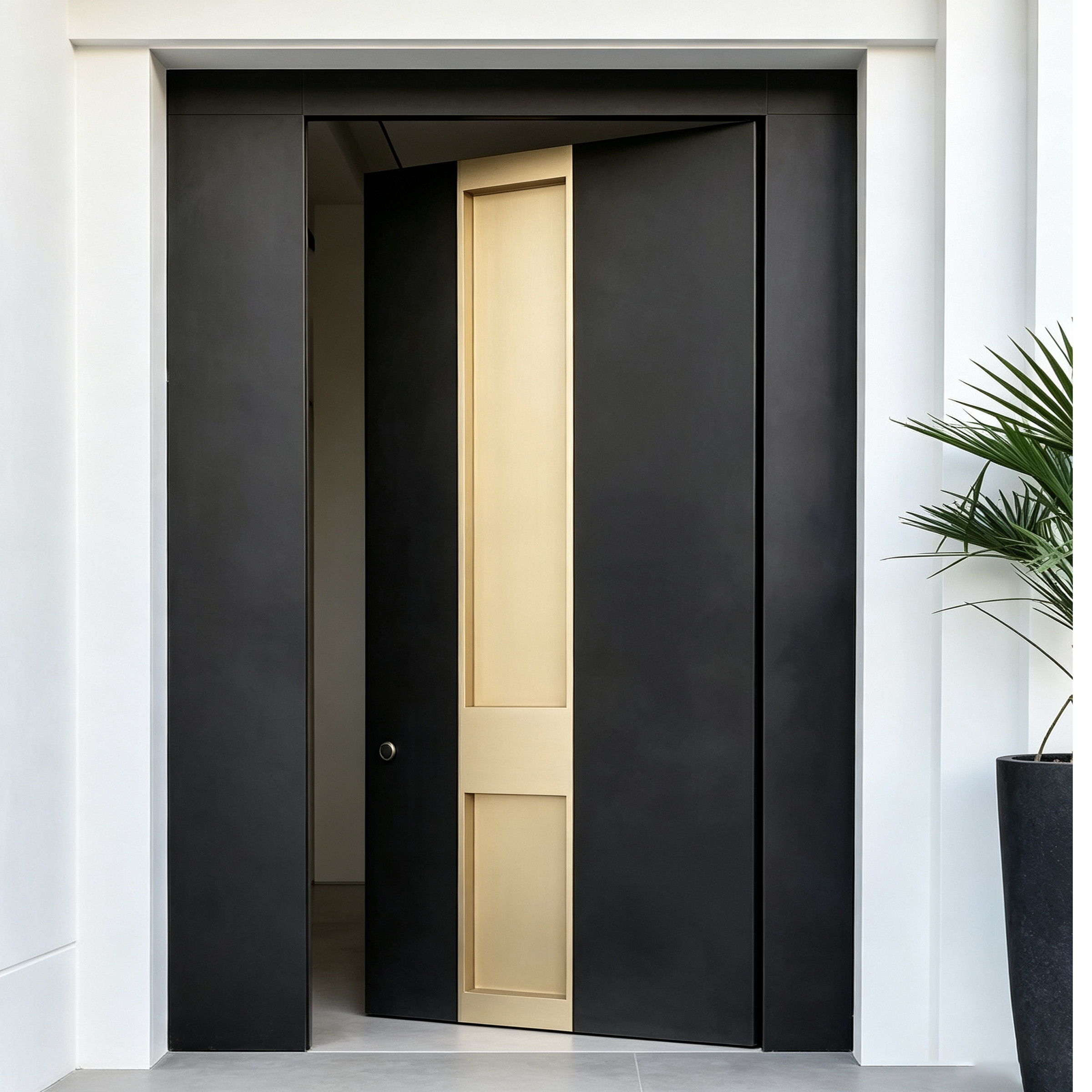
Why Choose Landran Door for Your Pivot Door
Landran Door is a specialized manufacturer of aluminum entrance doors based in Foshan, China — one of the world's most established aluminum fabrication regions. Its P-series pivot doors use high-strength 6063 aluminum profiles, upper and lower offset pivot hardware rated up to 500kg per leaf, and fluorocarbon powder coating for long-term weather resistance. Each door is manufactured to custom dimensions with a slim frame, flame-retardant polyurethane filling, and your choice of glass configuration and finish. Landran supports OEM and ODM projects, and ships worldwide with trade terms from EXW to DDP. Browse the pivot door range or send an inquiry with your opening size for a customized quotation.
Frequently Asked Questions
Is an aluminum pivot door more expensive than a hinged door?
Yes. Pivot hardware, reinforced profiles, and specialized installation make pivot doors more expensive than comparable hinged doors — typically 30% to 60% more, depending on size and hardware quality. The premium buys architectural impact, larger opening sizes, and a distinctive operating experience.
Can a pivot door be used as an exterior entrance door?
Absolutely. Aluminum pivot doors are widely used as exterior entrances in villas and commercial buildings. Specify insulated or laminated glass, perimeter weather gaskets, and a low threshold, and verify the floor and header structure can carry the pivot loads.
What is the maximum weight an aluminum pivot door can support?
It depends on the pivot hardware rating and profile design. Residential systems are commonly rated 100kg–300kg per leaf; high-capacity systems like Landran's P-series are rated up to 500kg per leaf, which supports 3m-tall panels with heavy glass.
Do pivot doors need special floors?
The bottom pivot plate must be recessed into the floor and anchored to a solid substrate, so the floor at the pivot point needs preparation before final flooring is installed. Beyond that, no special flooring is required.
Are pivot doors hard to open?
No — a well-engineered pivot door is actually easier to open than a hinged door of the same size, because the pivot bearing carries the weight and the moment arm is balanced. The motion feels smooth and heavy in a premium way, not stiff.
How long do aluminum pivot doors last?
With quality aluminum profiles, fluorocarbon coating, and rated pivot hardware, a pivot door can last 30 years or more. Regular maintenance is limited to lubricating the pivot bearings, checking the seals, and cleaning the profiles.
Conclusion: The Door That Defines Modern Entrances
An aluminum pivot door is more than a door — it is a design system. By moving the rotation axis off the jamb and into the floor and ceiling, manufacturers can build entrance doors that are taller, wider, and more dramatic than anything a hinged door can deliver, while keeping frames slim and operation effortless. The trade-offs are real: higher cost, structural planning, and installation complexity. But for a villa, a flagship store, or an office lobby where the entrance is the first impression, few architectural elements deliver as much impact per square meter.
When you are ready to specify a pivot door, work with a manufacturer that can show you the engineering: certified load capacity, alloy grade, profile thickness, and finish quality. Landran Door builds aluminum pivot doors to order — customized size, weight rating, and finish — and ships worldwide. Contact Landran Door with your opening dimensions to get started.