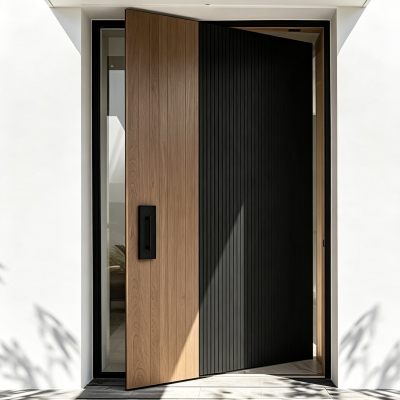
Safety Glass for Oversized Aluminum Doors: Tempered, Laminated & Impact-Rated Standards
Glass is what turns an oversized aluminium entrance into a wall of light, and it is also the part most often specified on habit rather than on arithmetic. On a leaf two and a half metres tall, the glazing has to resist wind load, thermal cycling and impact. Here is how the three differ, and what actually decides the thickness.
Quick answer: specify tempered glass when you need strength in a single pane, laminated glass when the pane must stay in the frame after it breaks, and a tempered-plus-laminated build-up when a code demands both. Thickness then follows span, wind load and the deflection limit you design to, not door height alone.
Why an oversized leaf changes the glazing question
In a standard 900 mm door the glass is a small insert inside a stiff box. In a 1200 × 2600 mm leaf, or a pivot door with a full-height lite, the same glass becomes structural and carries wind pressure over a far larger area. Both the bending stress and the deflection at mid-pane scale with that area, and deflection usually bites first: a pane that passes a stress check can still flex enough to pull off its gasket or touch the frame edge. The bigger area also raises thermal load, because the centre of a large lite heats faster than its shaded edge, and that edge stress is what cracks annealed glass.
Tempered glass: strength in one pane
Tempering heats the glass to roughly 620–700 °C and quenches it fast, locking the surfaces into compression and the core into tension. The result is a pane about four times stronger than annealed glass and far more resistant to thermal stress. When it fails it releases that stored energy at once and breaks into small blunt granules rather than long shards, which is what qualifies it as safety glazing.
Its known weakness is spontaneous breakage from nickel sulphide inclusions, microscopic particles that can change volume over time and crack the pane with no load applied. Heat soak testing, holding the finished glass near 290 °C so rogue inclusions fail in the oven rather than on your façade, reduces but does not eliminate the risk. Tempered glass also cannot be cut or drilled afterwards, so every dimension and cut-out must be final before the furnace.
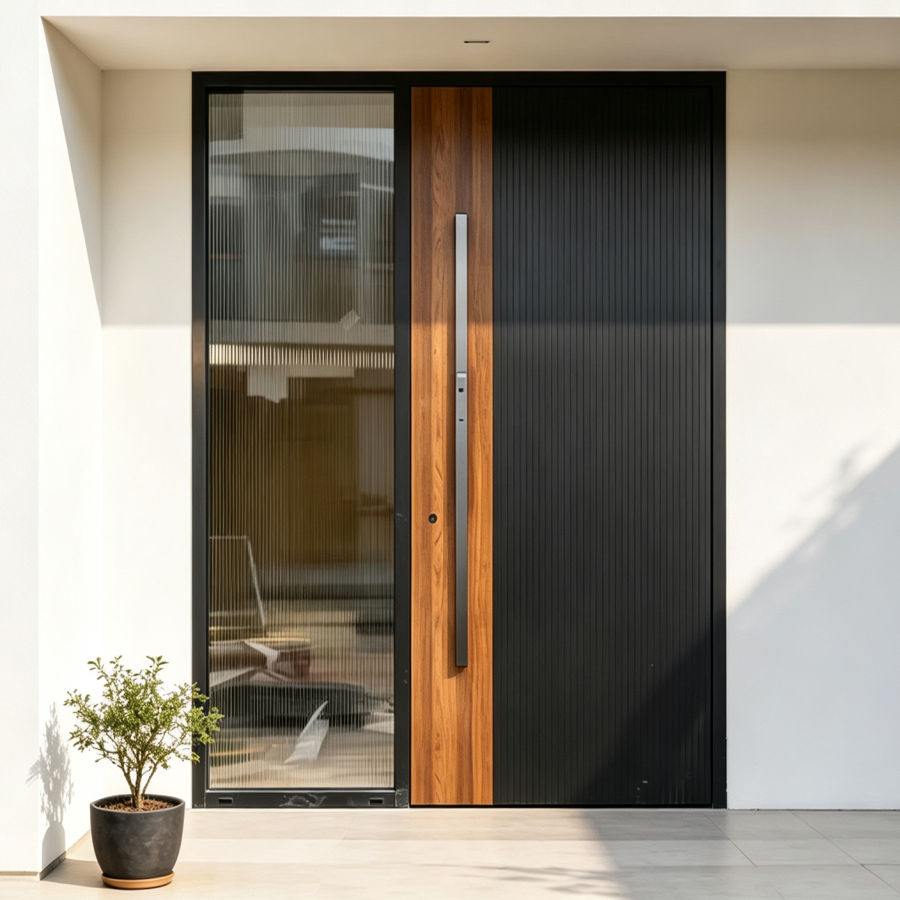
Laminated glass: the interlayer that holds it together
Laminated glass bonds two or more panes with a plastic interlayer — PVB for general architectural use, or a stiffer ionoplast interlayer where extra post-breakage rigidity is needed. When the glass cracks, the fragments stay attached to the interlayer and the opening stays closed. That is why laminated glass is the usual answer for security, for acoustic control and for sloped or overhead glazing.
One clarification is worth passing to customers: laminated glass is not automatically stronger than tempered glass, because a pane built from two annealed plies is a safety product rather than a high-strength one. Laminated glass can be made from annealed, heat-strengthened or tempered plies, and a heat-strengthened build-up is common for oversized lites that must resist thermal stress without the spontaneous-breakage risk of fully tempered glass.
Tempered vs laminated: which one where
| Question | Tempered | Laminated |
|---|---|---|
| Strength in a single pane | About 4× annealed | Depends on the plies used |
| Break pattern | Granules; opening left clear | Cracks held in place |
| Post-breakage security | Low | High |
| Sound reduction | Moderate | Better with an acoustic interlayer |
| Fabrication freedom | All cutting before tempering | Cut and drilled before lamination |
| Typical door use | General safety glazing | Security, coastal, acoustic, oversized |
For most entrance doors the answer is both: a tempered outer ply laminated to a tempered or heat-strengthened inner ply.
How thick should glass be in an oversized door?
There is no universal table, because thickness falls out of three inputs: the design wind pressure for the site, the unsupported span of the lite, and the deflection limit the specification imposes. The span is the clear opening between supports, not the door height. Entrance doors start around 6 mm for small lites and move to 8 mm, 10 mm or a laminated build-up as the span grows.
Insulated units are quoted as a build-up rather than a single figure — something like 6 mm glass plus a 12 mm cavity plus 6 mm glass — because the cavity, spacer and low-emissivity coating all drive the thermal result. One trap recurs: a supplier quotes the thickness that worked on a smaller door of the same style, though the arithmetic does not carry over.
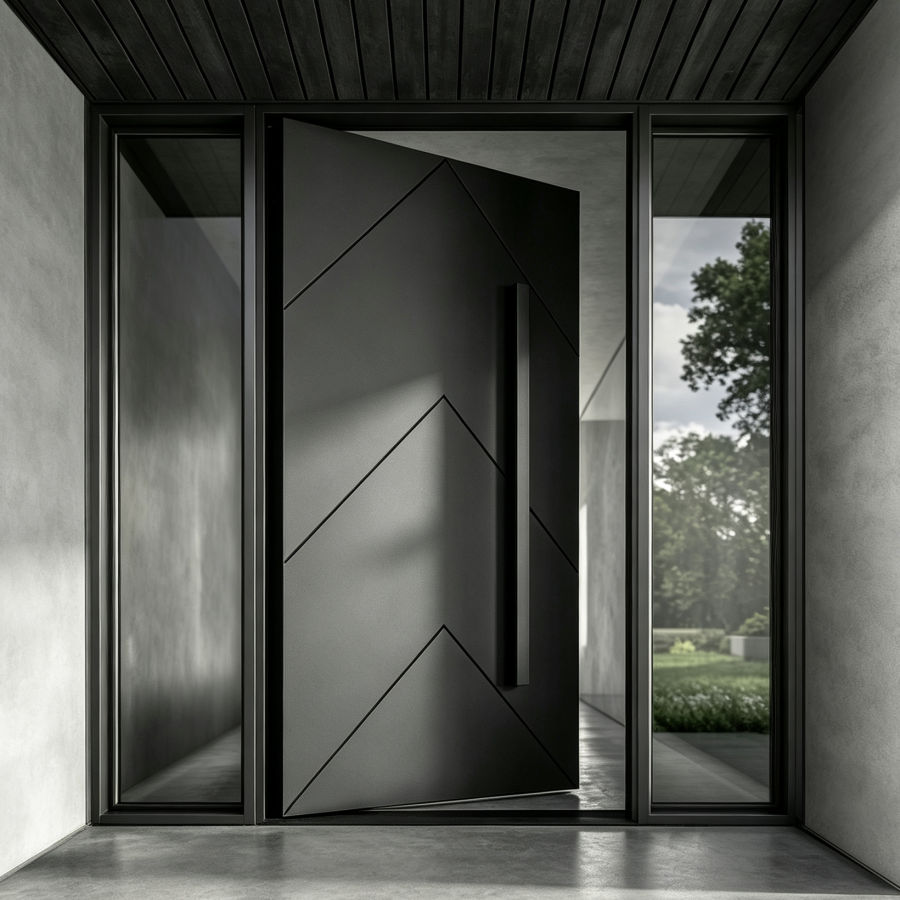
Impact-rated glazing: what the codes actually ask for
In windborne-debris regions such as Florida, the US Gulf and Atlantic coast and northern Australia, ordinary safety glazing is not enough. Assemblies are tested as a system: a missile impact followed by cycles of positive and negative pressure, which checks both that the unit survives the hit and that it still keeps water and air out afterwards.
The rating belongs to the whole assembly — leaf, glass build-up, gaskets, frame and anchorage — not to the glass alone. A rated build-up in an unrated frame does not give you a rated door, because the approval documents describe one tested configuration and changing the glass make-up, frame depth or anchor spacing takes you outside it.
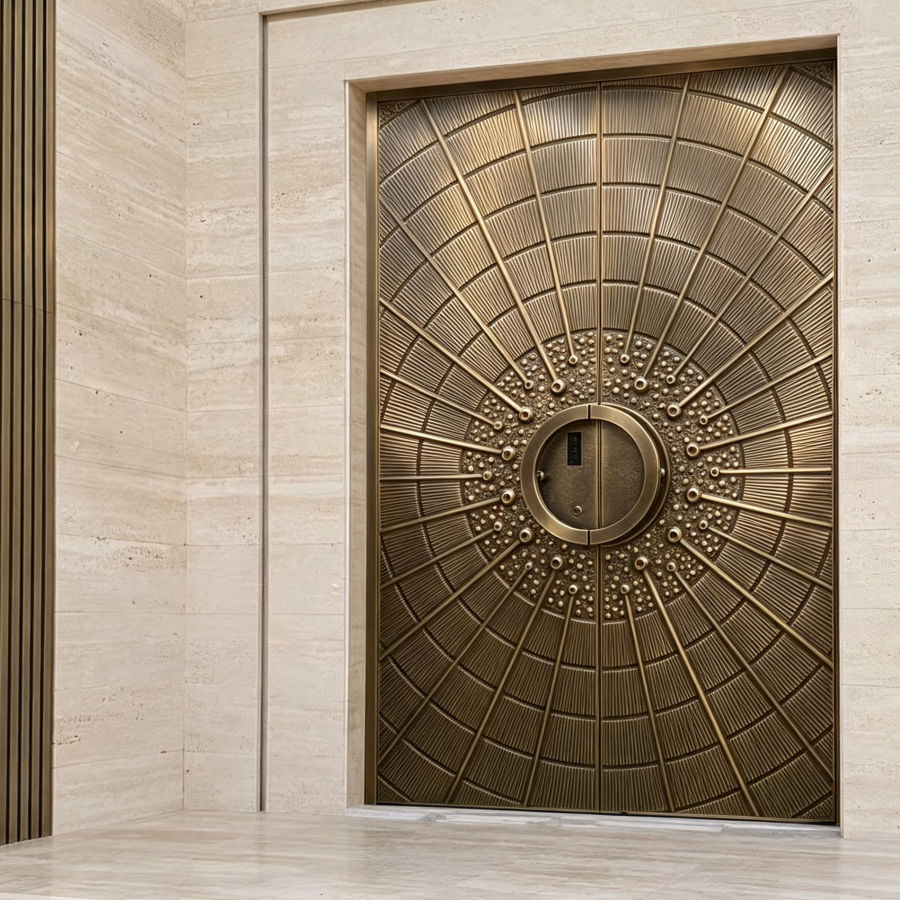
Details that decide whether a big pane survives
- Setting blocks. Neoprene or EPDM blocks at the quarter points carry the weight of the lite; leave them out and the glass rests on the frame edge and chips.
- Edge clearance. Glass must never touch metal, and the clearance plus gasket compression is part of the design rather than an installation tolerance.
- Deflection room. A large pane moves under wind, so the rebate and gasket depth must allow that movement without the edge contacting the frame.
- Hardware capacity. Every kilogram of glass adds to the leaf; hinges, pivots and closers are sized on total leaf weight including glazing, plus a margin.
Frequently asked questions
Is tempered glass always safer than laminated glass?
No. Tempered glass is stronger before it breaks; laminated glass is safer after. Where the door must stay closed when struck, laminated or a tempered-laminated build-up is the better answer.
Can a single 6 mm tempered pane be used in a very tall door?
Only if the span, wind load and deflection limit check out. On a full-height lite the deflection limit normally pushes you to a thicker pane or a laminated build-up.
Does double glazing make the glass stronger?
Not by itself. An insulated unit improves thermal performance, while strength comes from the thickness and type of the plies.
In summary
Tempered glass supplies strength, laminated glass supplies post-breakage integrity, and the combination covers most door applications. Because thickness follows span, wind load and deflection, the useful conversation with a supplier starts with dimensions and a wind pressure rather than a preference for a particular glass name.