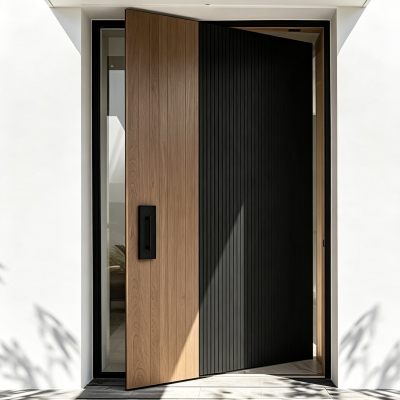
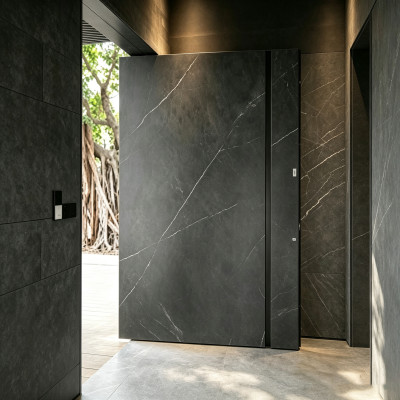
OEM & ODM with Landran Door: From Inquiry to Delivery in 6 Steps
Custom door programmes rarely fail in the factory. They stall on the paperwork around it: a drawing that does not match the measured opening, a finish nobody specified, hardware chosen after the price was agreed. Here is what Landran Door can take on under OEM and ODM, and the six steps a custom order travels from enquiry to container.
Quick answer: OEM means doors built to your drawing and shipped under your brand; ODM means adapting a design platform already in the Landran range to your market. Most programmes mix the two. The workflow runs enquiry, quotation, sample approval, production, pre-shipment inspection, then packing and shipping.
What OEM and ODM Mean for an Aluminium Door Line
Under OEM, the buyer owns the design intent — the drawing, the tolerances, the brand on the door — while machining, finishing and assembly follow that specification. Under ODM, the buyer starts from a design already in the Landran catalogue and adapts dimensions, colour, glass and branding for a specific market.
The difference is commercial rather than technical: OEM means the buyer carries the engineering and tooling decisions, while ODM starts from a platform whose engineering is already proven. New buyers often begin with ODM and move towards OEM once their specification and branding are settled.
What Can Be Customised on a Landran Door
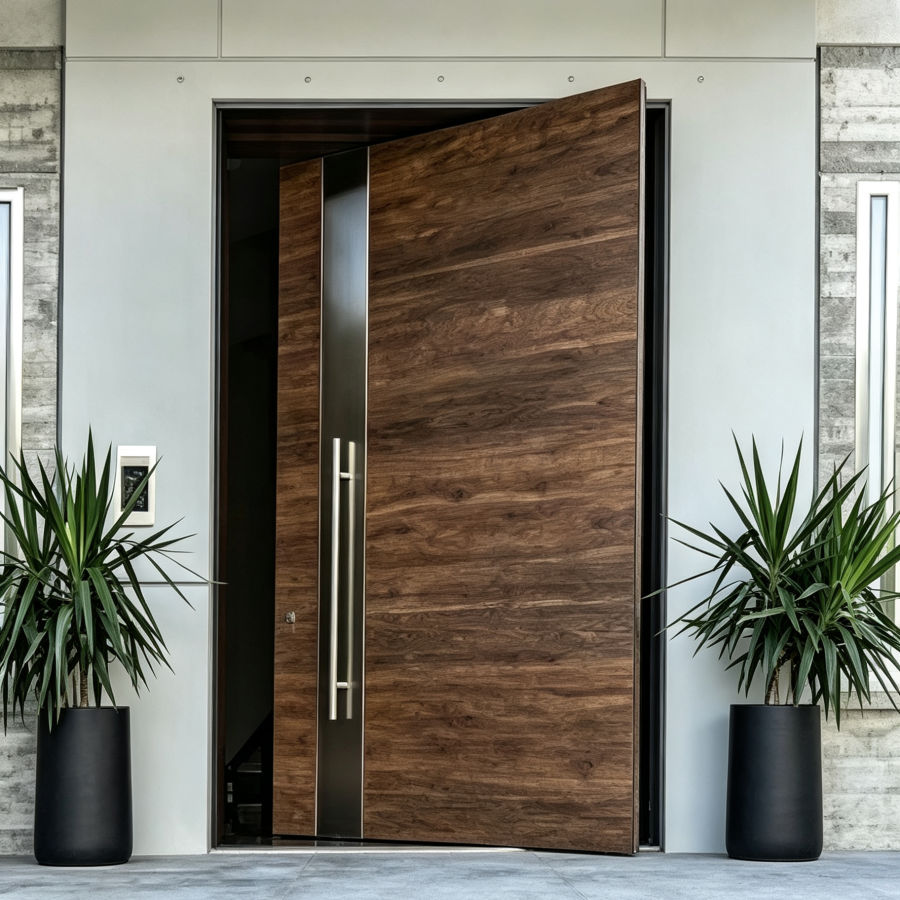
- Dimensions and opening type. Single, unequal double, double and pivot leaves, built to the measured opening.
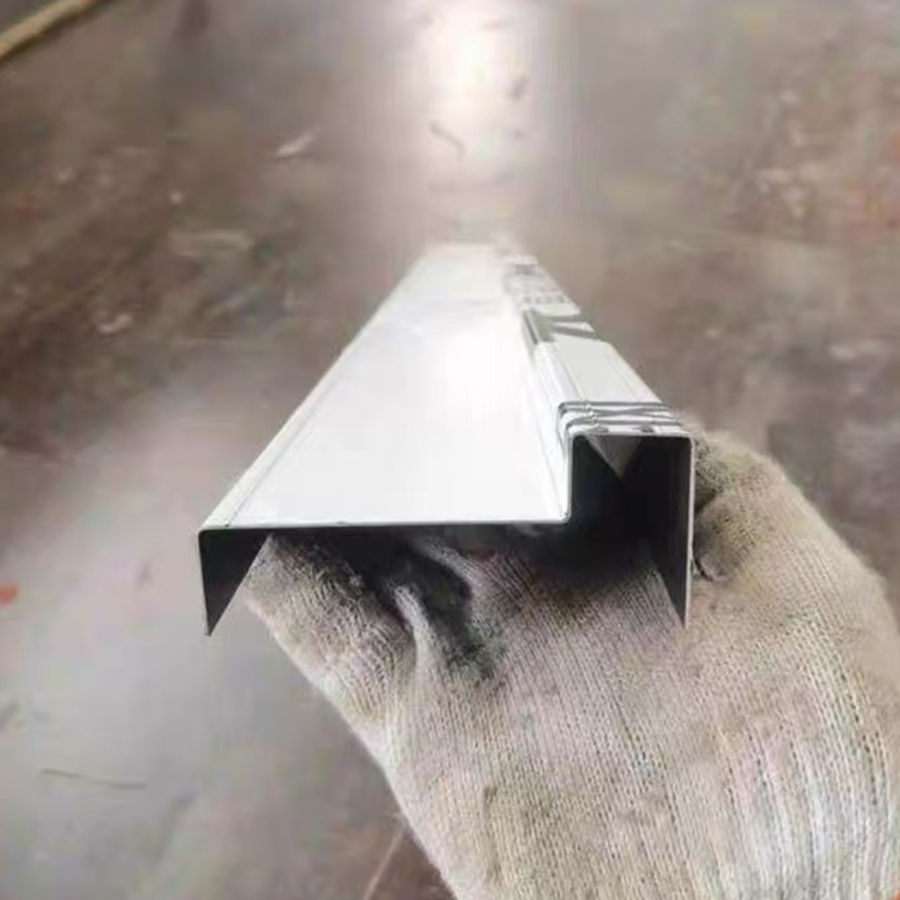
- Frame section and plate build-up. Sections such as a 120×65×3.0 mm frame on wide double doors, with leaf build-ups starting around a 4 mm front plate and 3 mm rear plate.
- Colour and finish. Powder coating in solid colours and wood-grain heat transfer, applied on in-house lines with pre-treatment, plus dual-colour leaves with one finish outside and another inside.
- Glass and glazing. Build-up, low-emissivity coatings, laminated or tempered plies, and the gaskets and beads that hold them.
- Hardware and locking. Hinge and pivot sets, handles, multi-point locks, closers, thresholds and preparation for electronic locking.
- Branding and packing. Logo marking, carton printing and labelling, and packing built around the shipping method.
The Six Steps from Inquiry to Delivery
Step 1 — Enquiry and requirement capture
Every programme starts with the opening, not a product name. The useful enquiry says how many doors, of which type, at which sizes, in which finish, delivered where. A dimensioned sketch and a photograph of the existing entrance are enough for a first proposal; a full drawing is better. Add a target date and destination port and the reply becomes more useful still.
Step 2 — Technical review and quotation
The specification is checked against the opening before it is priced: wall structure, leaf weight, hinge or pivot capacity, glass build-up and the frame section needed to carry it. A 2.6 m pivot leaf and a 1.2 m double door have different structural budgets, and the fix for an over-sized leaf belongs here. What comes back is a quotation naming the section, plate thickness, finish, hardware and packing, so buyers can compare like with like.
Step 3 — Sample and first-article approval
When colour, surface or branding is critical, the programme should pass through a sample. Because finishing is in-house, a single sample follows the same process route as a fifty-door order; the purpose of the sample is to freeze the reference. Approve a physical piece or a labelled photo set, and treat that approval as the standard for the order.
Step 4 — Order confirmation and production
Production begins once the drawing, finish and hardware list are confirmed. Profiles are cut to length and machined, frames fabricated, surfaces pre-treated and coated, and the leaf assembled, glazed and fitted out. Lock mortises, hinge pockets and drainage slots are positioned here, which is why a hardware change after confirmation costs time rather than a little money.
Step 5 — Pre-shipment inspection
Before packing, doors are checked against the confirmed drawing and the approved sample: dimensions and squareness, finish, glazing, seal continuity and hardware operation. If the buyer uses a third-party inspector, this is when that inspector should be present; inspecting after packing removes the chance to correct anything.
Step 6 — Packing, shipping and after-sales
Doors are packed with edge protection, frame bracing and moisture control, then loaded against a plan that keeps the heaviest leaves stable. After delivery, spare parts, replacement gaskets and hardware availability are the practical questions.
What Decides Lead Time and Minimum Order Quantity
Lead time follows the number of distinct finishes in the order, the glass and hardware specified, the packing method and the shipping mode, not simply the door count; each finish change adds a setup. Minimum order quantity behaves the same way, reflecting how much bespoke setup the design needs rather than a fixed house number. Both depend on the specification, so they are confirmed in the quotation for that order — a supplier who quotes a firm delivery date before seeing the finish and hardware list is estimating.
The Inquiry Checklist That Gets the Fastest Answer
| What to send | Why it matters |
|---|---|
| Opening size in width × height × wall thickness | Decides frame section, leaf geometry and plate build-up |
| Quantity and door mix | Drives setup, packing and the container loading plan |
| Finish and colour reference | Powder or heat transfer, single or dual colour, matte or textured |
| Glass requirement | Build-up, coating and safety type change weight and hardware |
| Lock and hardware preference | Mortise, multi-point or electronic preparation changes machining |
| Branding and packing | Logo marking, carton labelling and documentation sets |
| Terms and target date | FOB or CIF port and delivery window shape the schedule |
Send it as a list even when the numbers are approximate. An enquiry that arrives with dimensions is easier to answer than one that arrives without them.
Frequently Asked Questions
Can Landran produce doors under our own brand?
Yes. Machining, finishing, assembly and packing all happen in-house, so branding is a marking and packing decision rather than a separate production line.
Do we need to send full drawings to get a quotation?
No. A dimensioned sketch plus photographs is enough for a first proposal and an indicative price. Production only starts against a drawing confirmed by both sides.
If we work ODM, can the design be exclusive to us?
ODM means adapting a platform that forms part of the Landran range, so the same platform may be supplied to other buyers in different sizes and finishes. Where exclusivity matters, it belongs in the agreement rather than in the assumption.
In Summary
OEM and ODM are mainly a question of who defines the specification; the six-step sequence that follows is the same either way. The buyer's leverage sits at three approval points: the enquiry that fixes the opening, the sample that fixes the finish, and the inspection that fixes what leaves the factory.