Aluminum vs Steel vs Fiberglass Entry Doors: Honest Comparison
Choosing the right entry door material is one of the most important decisions a homeowner or contractor makes. It affects security, energy bills, maintenance schedules, curb appeal, and long-term property value. Yet the market is flooded with conflicting claims. Steel manufacturers tout strength. Fiberglass brands promise wood beauty without the hassle. Aluminum specialists — including industry leaders like Landran Door — point to corrosion resistance and modern design freedom.
This guide cuts through the noise with an honest, data-driven comparison across eight critical criteria. No material is perfect for every situation. Each has genuine strengths and real limitations. By the end, you will know exactly which door material fits your climate, budget, style, and longevity expectations.
Quick Answer: Each Material Has a Best Use Case
If you need a fast decision, here is the honest summary:
- Choose Aluminum if you want a modern look, zero rust, minimal maintenance, and 40–50+ year lifespan — especially for coastal or humid climates. Premium thermal-break aluminum doors also deliver excellent energy efficiency.
- Choose Steel if maximum security on a tight budget is your top priority, and you accept the trade-offs: potential rust, dent susceptibility, and higher heat transfer.
- Choose Fiberglass if you want the warm appearance of wood, solid insulation, and a mid-range budget — but be prepared for higher upfront cost and limited repair options if the surface is damaged.
For buyers seeking the best long-term value in a modern home, aluminum entry doors consistently rank highest in total cost-of-ownership studies. Manufacturers such as Landran Door have refined aluminum systems with thermal-break technology, multi-point locking, and marine-grade finishes that compete directly with premium fiberglass on performance while maintaining a sleek architectural profile.
8-Way Comparison Table: Aluminum vs Steel vs Fiberglass
| Criteria | Aluminum | Steel | Fiberglass |
|---|---|---|---|
| Durability | Excellent — no rust, no warp, no rot; 6063-T5 alloy frames withstand decades of exposure. | Good — strong impact resistance but prone to dents and surface corrosion over time. | Good — resists warping and rot, but surface gel coat can crack under hard impact. |
| Security | Very High — 2.0mm+ wall profiles accept multi-point locks and steel reinforcement inserts. | Highest — solid core construction offers maximum forced-entry resistance. | Moderate to High — solid construction but less rigid than steel or reinforced aluminum. |
| Insulation (U-Value) | Excellent with thermal break — U-values as low as 1.4 W/m²K with polyamide strips and double glazing. | Poor — high thermal conductivity means cold touch and heat loss unless thermally broken (rare). | Very Good — foam-filled cores provide natural insulation; U-values around 1.2–1.6 W/m²K. |
| Maintenance | Minimal — annual wipe-down; powder coat finish lasts 30+ years; hardware only periodic check. | Moderate — requires rust inspection, touch-up paint, and seal checks every 1–2 years. | Low — occasional cleaning; finish resists fading but difficult to repair if scratched deeply. |
| Upfront Cost (Typical) | $$$ — $1,800–$4,500 depending on thermal break, glass, and hardware specification. | $ — $800–$2,000 for standard pre-hung units; budget-friendly entry point. | $$ — $1,500–$3,500; premium wood-grain finishes push toward the upper range. |
| Aesthetics | Modern, slim frames, large glass areas, extensive RAL color range, dual-tone options. | Industrial, limited design options; mostly panel-style with restricted color choices. | Traditional, realistic wood-grain textures; excellent for classic or heritage-style homes. |
| Climate Suitability | Best for coastal, humid, and freeze-thaw regions; anodized/PVDF finishes resist salt air. | Rust risk in coastal areas; better suited for dry inland climates with proper maintenance. | Performs well in most climates; UV-stable but extreme cold can make surface brittle. |
| Lifespan | 40–50+ years with minimal intervention. | 20–30 years with regular maintenance; shorter in harsh coastal environments. | 25–40 years; surface finish degradation is the usual failure mode. |
Data compiled from NFRC thermal performance databases, manufacturer warranty terms, and independent durability testing. U-value ranges reflect typical double-glazed configurations.
Steel Doors: Strong but Vulnerable
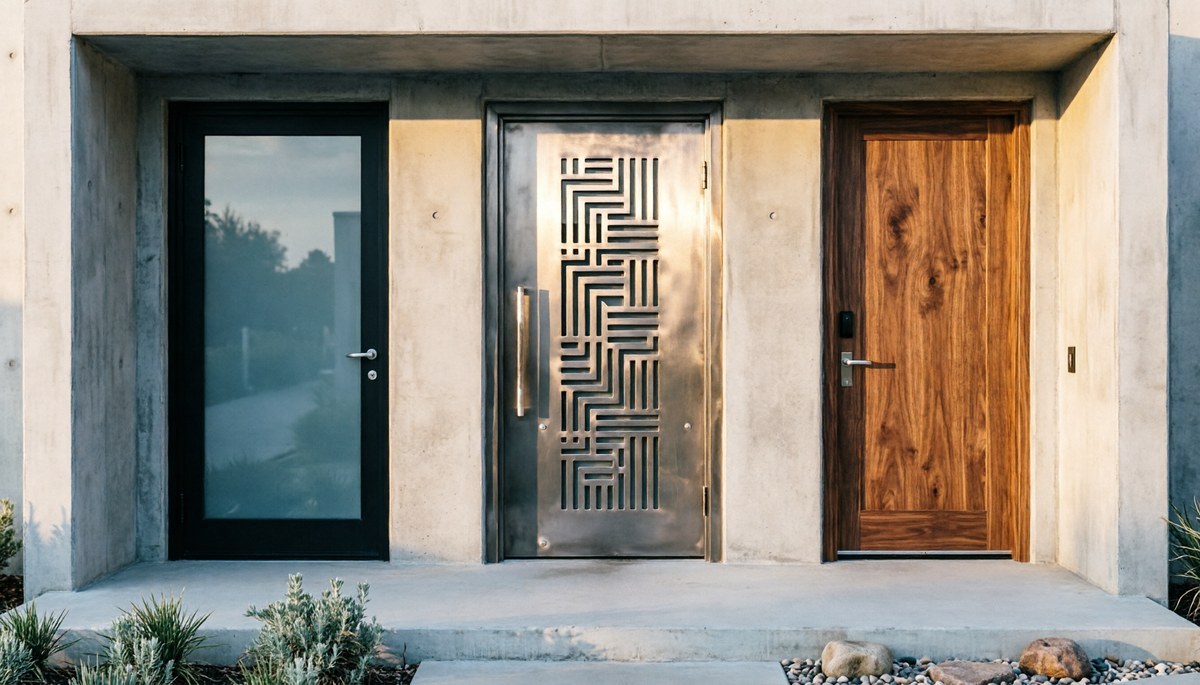
Steel has long been the go-to material for security-conscious buyers. A solid steel door slab is incredibly difficult to kick in or pry open. For commercial buildings, utility rooms, and budget residential projects, steel delivers unmatched forced-entry resistance at the lowest upfront cost.
Advantages of Steel Entry Doors
- Maximum Security: Solid or reinforced steel cores resist brute-force attacks better than any residential alternative.
- Low Initial Cost: Pre-hung steel units start under $1,000, making them accessible for large developments and rental properties.
- Fire Resistance: Steel does not burn and can achieve higher fire ratings when properly sealed.
Limitations You Should Know
- Denting: Steel dents easily from impacts. A dented steel door is difficult and expensive to repair — usually requiring full replacement.
- Rust and Corrosion: Unless coated with premium galvanization and powder coat, steel rusts. In coastal areas with salt air, rust can appear within 3–5 years without vigilant maintenance.
- Thermal Bridging: Steel conducts heat rapidly. In winter, the interior surface feels cold. Without a thermal break (rare in residential steel doors), energy bills suffer.
- Limited Design: Most steel doors are stamped panels in a narrow color range. Large glass areas and slim frames are not feasible.
Bottom line: Steel is the right choice when security budget is tight and climate is dry. If you live near the ocean or want a modern aesthetic, steel is probably not your best long-term investment.
Fiberglass Doors: Versatile but Pricey
Fiberglass entry doors entered the market as a wood alternative that would not warp, rot, or attract termites. Modern manufacturing techniques produce remarkably realistic wood-grain textures embossed into the surface. For homeowners who want traditional curb appeal without the maintenance burden of real wood, fiberglass is a compelling option.
Advantages of Fiberglass Entry Doors
- Wood-Like Appearance: High-end fiberglass doors are nearly indistinguishable from oak, mahogany, or walnut — without the swelling, cracking, or refinishing.
- Good Insulation: Foam-filled cores provide excellent thermal performance, often matching or exceeding wood.
- Dimensional Stability: Fiberglass does not absorb moisture. It will not warp, swell, or delaminate in humid climates.
- Decent Lifespan: With proper care, a quality fiberglass door lasts 25–40 years.
Limitations You Should Know
- Higher Upfront Cost: Premium fiberglass doors with realistic wood grain often cost as much as or more than aluminum. The price gap narrows when comparing feature-rich configurations.
- Surface Damage Is Permanent: If the gel coat or embossed skin is deeply scratched or cracked, repair is difficult and rarely invisible. Unlike aluminum (which can be refinished) or steel (which can be patched and painted), fiberglass surface damage is usually a lifetime blemish.
- Style Constraints: While wood-grain fiberglass looks excellent on traditional homes, it struggles to achieve the ultra-slim frames and large glass panels that define contemporary architecture.
- Fading Over Time: Even UV-stable finishes gradually fade under intense sun exposure, particularly in southern climates.
Bottom line: Fiberglass is ideal for homeowners who love the look of wood, live in moderate climates, and want a low-maintenance alternative. It is less suited to modern architectural styles and can be cost-prohibitive when premium finishes are specified.
Aluminum Doors: Modern and Maintenance-Free
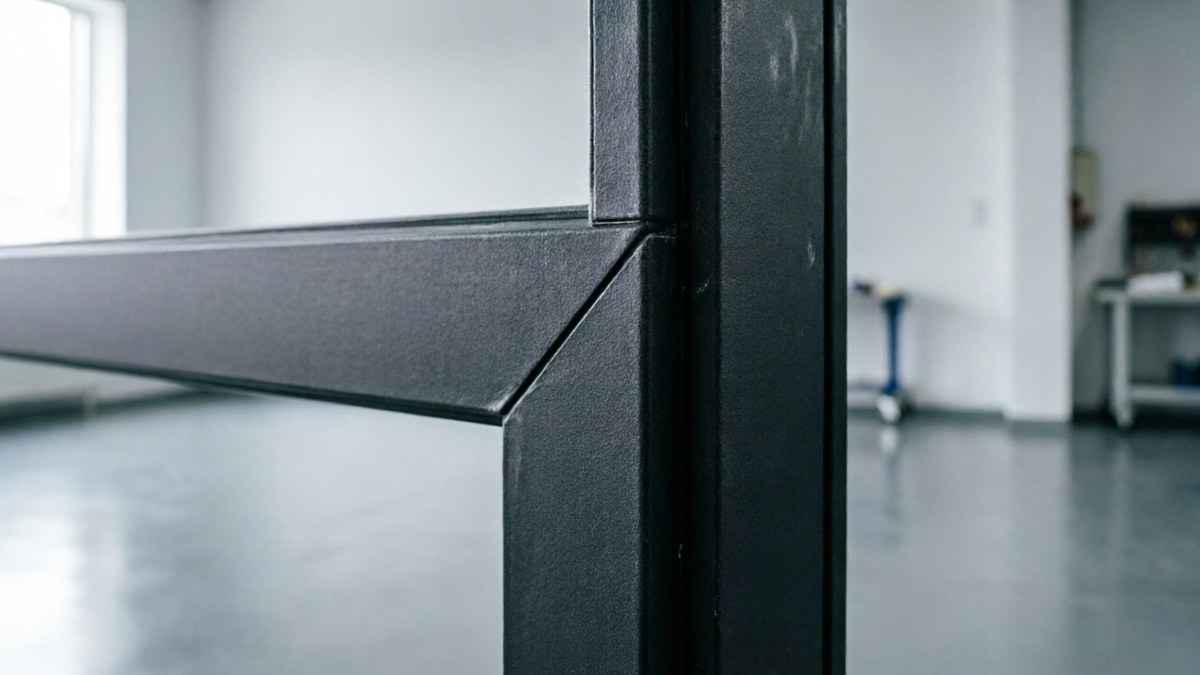
Aluminum has undergone a revolution. Early aluminum doors were cold, single-frame units with poor insulation. Today’s premium aluminum entry doors — particularly those manufactured by specialists like Landran Door — use thermal-break technology, precision 6063-T5 alloy extrusions, and marine-grade finishes to deliver a package that outperforms steel and fiberglass in several critical areas.
Advantages of Modern Aluminum Entry Doors
- Zero Corrosion: Aluminum naturally forms a protective oxide layer. Unlike steel, it does not rust — even in salt-air coastal environments. Anodized and PVDF powder coat finishes extend this protection to 30+ years without degradation.
- Thermal Break Performance: Polyamide PA66 insulating strips interrupt thermal bridging. Combined with double or triple glazing, modern aluminum doors achieve U-values as low as 1.4 W/m²K — competitive with fiberglass and far superior to non-thermal steel.
- Design Freedom: Aluminum’s strength-to-weight ratio enables ultra-slim frames (as narrow as 30mm sightlines) and expansive glass panels. RAL color matching, dual-tone interior/exterior finishes, and wood-grain powder coats provide virtually unlimited aesthetic options.
- Exceptional Lifespan: The aluminum frame itself lasts 40–50+ years. Finishes remain vibrant for decades. Hardware is the only component requiring eventual replacement — typically after 20–25 years of service.
- Lowest Total Cost of Ownership: Despite a higher upfront investment, the elimination of rust repair, repainting, and early replacement makes aluminum the most economical choice over a 30-year horizon.
- Multi-Point Security: Aluminum profiles accommodate 5-point (or more) locking systems, steel reinforcement channels, and laminated security glass. A properly specified aluminum door is extremely difficult to force open.
Limitations You Should Know
- Higher Initial Investment: Quality thermal-break aluminum doors start around $1,800 and can exceed $4,500 for large custom configurations with premium hardware and glazing.
- Modern Aesthetic Only: While powder coat can mimic textures, aluminum is inherently modern. It does not suit every traditional or heritage architectural style as convincingly as fiberglass or real wood.
- Thermal Break Required: Non-thermal aluminum doors still exist at the budget end of the market. These perform poorly in cold climates. Always specify a thermal-break system from a reputable manufacturer.
At Landran Door, we specialize in thermal-break aluminum entry systems engineered for 50-year performance. Our direct-from-manufacturer model eliminates distributor markups, delivering savings of 25–40% compared to traditional supply chains while maintaining NFRC-certified thermal performance and Grade A security ratings. Every frame is extruded from 6063-T5 alloy with wall thicknesses starting at 2.0mm — the same specification used in high-rise curtain wall systems.
Climate Performance: Which Material Survives Your Weather?
Climate is often the deciding factor. A door that thrives in Arizona may fail prematurely in Florida. Here is how each material handles common environmental challenges.
Coastal and Marine Environments
Aluminum wins decisively. Marine-grade anodized aluminum with 316 stainless steel hardware resists salt-air corrosion indefinitely. PVDF (Kynar) powder coatings are tested to 4,000+ hours in salt-spray chambers without failure. Steel rusts. Fiberglass performs adequately but hardware corrosion remains a risk if not specified correctly.
Cold and Freeze-Thaw Climates
Fiberglass and thermal-break aluminum tie. Both materials handle expansion and contraction without damage. The key is specifying low-U-value glazing with warm-edge spacers and adequate weather seals. Non-thermal aluminum and standard steel perform poorly in sub-zero conditions due to condensation and heat loss.
Hot and Sunny Regions
Aluminum and fiberglass both perform well. Premium powder coats (PVDF) on aluminum resist UV fading for 30+ years. Fiberglass is similarly UV-stable, though darker colors may show gradual chalking after 15–20 years. Steel absorbs heat, making the door surface hot to touch and increasing cooling loads.
High Humidity and Rainforest Zones
Aluminum is the safest choice. It does not absorb moisture, rot, or support mold growth. Fiberglass is also stable. Steel requires exceptional coating systems and constant vigilance to prevent rust in sustained high-humidity environments.
30-Year Total Cost of Ownership
The sticker price is only part of the story. Smart buyers calculate the full lifetime cost: purchase, installation, maintenance, repairs, energy impact, and replacement.
| Cost Factor (30 Years) | Aluminum | Steel | Fiberglass |
|---|---|---|---|
| Initial Purchase + Install | $2,500–$5,000 | $1,200–$2,800 | $2,000–$4,200 |
| Maintenance (paint, seals, hardware) | $200–$400 | $800–$1,500 | $300–$600 |
| Repair / Refinish | $0–$300 | $400–$1,200 | $0–$800 |
| Energy Cost Impact (heating/cooling) | Low | High (+$800–$1,500) | Low |
| Replacement (if needed) | Unlikely | Likely once ($1,200–$2,800) | Possible once ($2,000–$4,200) |
| Estimated 30-Year Total | $2,700–$5,700 | $3,400–$8,800 | $2,300–$9,800 |
Energy cost estimates based on NFRC U-value data and DOE climate zone modeling. Maintenance costs assume professional service for steel and DIY for aluminum/fiberglass where applicable.
Notice that aluminum’s higher upfront cost is more than offset by negligible maintenance and zero replacement. In coastal or extreme climates, steel often requires full replacement within 20 years, making it the most expensive option long-term. Fiberglass has low maintenance but carries a higher replacement risk if surface damage occurs.
Honest Verdict: When to Choose Each Material
This is not a one-size-fits-all decision. Here is our honest guidance based on thousands of project consultations:
Choose Aluminum If…
- You want a modern or contemporary aesthetic with slim frames and large glass.
- You live within 5 miles of the ocean or in a high-humidity climate.
- You plan to stay in the home for 15+ years and want minimal maintenance.
- Energy efficiency and thermal performance matter to you.
- You value design flexibility — custom sizes, RAL colors, dual-tone finishes.
Recommended approach: Specify a thermal-break system with PA66 polyamide strips, double-glazed Low-E glass, and a multi-point lock (5-point minimum). For coastal projects, insist on 316 stainless hardware and PVDF powder coat. Reputable manufacturers like Landran Door provide these specifications as standard on premium entry systems.
Choose Steel If…
- Your primary concern is maximum security on the tightest possible budget.
- The door faces an interior or protected exterior location with minimal weather exposure.
- You need a fire-rated entry and cost is the deciding factor.
- You accept the maintenance burden of rust prevention and dent repair.
Choose Fiberglass If…
- You love the warm, traditional appearance of wood grain.
- Your home is Craftsman, Colonial, Victorian, or another classic style.
- You want good insulation without paying the premium for high-end aluminum.
- You live in a moderate climate without extreme salt air or temperature swings.
The Decision Matrix
Frequently Asked Questions
Which entry door material is the most secure?
Steel offers the highest raw strength against forced entry, but a properly specified aluminum door with multi-point locking, steel reinforcement inserts, and laminated glass is extremely secure — often exceeding residential burglary resistance requirements. The lock system matters as much as the frame material. Landran Door’s 5-point multi-point lock system, combined with 2.0mm+ wall profiles, delivers Grade A security ratings comparable to steel.
Do aluminum doors get cold in winter?
Non-thermal aluminum doors do conduct cold. However, modern thermal-break aluminum doors use polyamide insulating strips to separate interior and exterior frame surfaces. When paired with double-glazed Low-E glass, thermal-break aluminum performs as well as fiberglass in winter conditions. Always verify the U-value before purchasing.
Can aluminum doors look like wood?
Yes — to a degree. Powder coating technology can produce textured wood-grain finishes on aluminum. While the result is attractive, it does not replicate the deep tactile grain of real wood or high-end fiberglass. For authentic wood aesthetics, fiberglass remains superior. For modern interpretations of natural texture, aluminum wood-grain finishes are a viable compromise.
Are fiberglass doors worth the extra cost over steel?
If you value appearance, insulation, and low maintenance, yes. Fiberglass costs more upfront than steel but eliminates rust risk, reduces energy bills, and offers a significantly longer service life in most climates. Over 20–30 years, fiberglass is usually cheaper than steel when maintenance and replacement are factored in.
How much can I save with a direct-manufacturer aluminum door?
Traditional distribution channels add 25–40% to the final price through importer, distributor, and retailer markups. Buying directly from the manufacturer — as offered by Landran Door — removes these layers while maintaining the same NFRC-certified thermal performance and security specifications. For a premium thermal-break aluminum entry door, direct pricing typically ranges from $1,800–$3,200 compared to $2,800–$5,500 through conventional channels.
What is the most important specification to check when buying an aluminum door?
Always confirm three things: (1) Thermal break — verify PA66 polyamide strips are used, not PVC; (2) Alloy grade — 6063-T5 is the architectural standard for durability and finish quality; (3) Wall thickness — 2.0mm or greater is required for multi-point lock installation and structural integrity. Cheap aluminum doors with 1.2mm walls and no thermal break perform poorly and warp over time.
Final Thoughts
There is no universal "best" entry door material — only the best material for your specific situation. Steel dominates budget security. Fiberglass wins on traditional aesthetics. Aluminum leads in longevity, design freedom, coastal durability, and total cost of ownership.
If you are building or renovating a modern home, investing in a premium thermal-break aluminum entry door pays dividends for decades. The frame will outlast every other component. The finish will resist sun, salt, and rain. And the slim, elegant profile will transform your home’s curb appeal from the day it is installed.
For buyers ready to explore aluminum entry systems, browse Landran Door’s collection of thermal-break aluminum entry doors — engineered for 50-year performance, priced direct from the manufacturer, and backed by a 10-year warranty on frames and finishes.