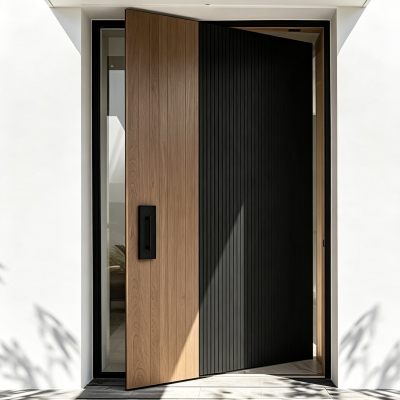
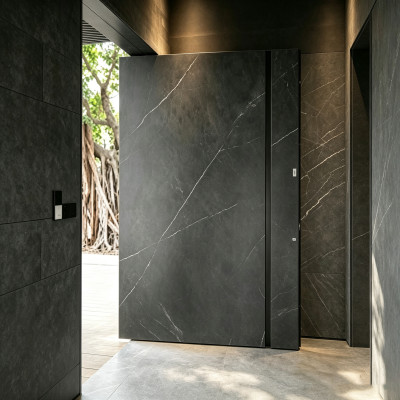
Aluminum Entry Door Cost Breakdown: What to Expect in 2026
Buyer Guides · Updated for 2026
Aluminum Entry Door Cost Breakdown: What to Expect in 2026
If you are budgeting for an aluminum entry door in 2026, the single most useful thing to know is this: the price range is enormous, and most of it is driven by decisions you control. A basic single aluminum entry door starts around $800, while a fully loaded oversized pivot system can exceed $10,000. This guide breaks down every cost component — unit price, glass, hardware, finish, installation, and total project budgets — so you can make informed decisions at every tier.
Quick answer: In 2026, an aluminum entry door costs $800 to $10,000+ fully installed. The three price tiers are: Basic ($800–$1,500 for a standard single door with single glazing), Mid-range ($1,500–$4,000 for a thermal-break door with double glazing and multi-point locks), and Premium ($4,000–$10,000+ for oversized, triple-glazed, custom-finish pivot doors). The biggest cost drivers are glass type, door size, finish customization, and installation complexity. Buying factory-direct from a manufacturer like Landran Door can save 25–40% compared to traditional supply chain pricing.
Below, we break down each cost layer in detail, provide three real-world total budget scenarios, and answer the most common cost-related questions homeowners and contractors ask in 2026.
Aluminum Entry Door Price Tiers for 2026
Before diving into individual cost components, it helps to see the full pricing landscape at a glance. The table below summarizes the three tiers that cover roughly 95% of residential aluminum entry door projects in 2026.
| Tier | Price Range (Installed) | Typical Spec | Best For |
|---|---|---|---|
| Basic | $800 – $1,500 | Single door, non-thermal, single glazing, standard RAL color, basic hinges | Budget renovations, rental properties, mild climates |
| Mid-Range | $1,500 – $4,000 | Thermal break, double glazing, multi-point lock, standard or custom RAL, quality hardware | Most new builds and replacements in temperate to cold climates |
| Premium | $4,000 – $10,000+ | Oversized or pivot, triple glazing, smart lock, wood-grain or anodized finish, concealed hardware | Luxury homes, architectural statements, extreme climates |
The ranges above include both the door unit and installation labor. A common mistake is comparing only the unit price without factoring in glazing, hardware, finish, and labor — which together can double the final cost. The sections below break down each component so you can see exactly where your money goes.
Unit Cost: What the Door Itself Costs
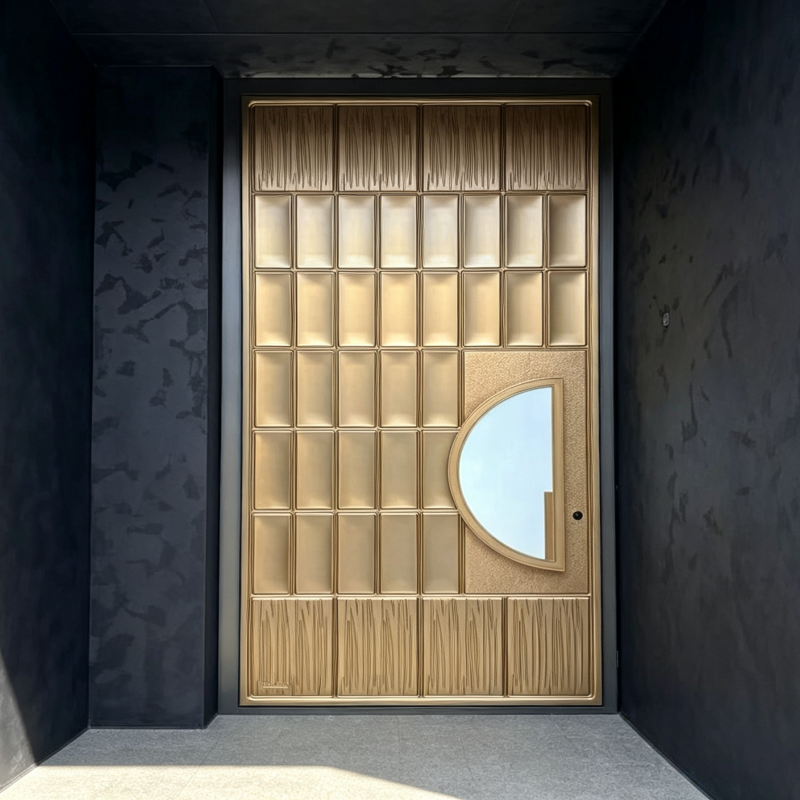
The "unit cost" is the bare door — the aluminum frame, the panel, and the basic hardware that ships from the factory. It does not include glass upgrades, custom finishes, or installation. In 2026, unit costs range as follows:
Standard single door (36" × 84"): $500 – $1,200 for a non-thermal profile; $900 – $2,000 for a thermal-break profile.
Double door (60" × 84"): $900 – $2,200 non-thermal; $1,600 – $3,500 thermal-break.
Oversized / pivot door (up to 48" × 96"): $2,000 – $6,000+, driven by profile thickness, reinforcement, and pivot hardware.
Custom size or shape: Add 20–40% to the nearest standard size, plus potential tooling charges for one-off profiles.
Three factors drive unit cost more than any others: profile grade (non-thermal vs thermal-break), panel type (flat vs designed vs glazed), and size. A thermal-break profile costs 40–60% more than a non-thermal equivalent because it incorporates a polyamide insulating strip that requires a more complex extrusion and assembly process. However, the thermal-break upgrade almost always pays for itself within 5–8 years through energy savings in any climate with a real heating or cooling season.
Panel type also matters. A flat solid panel is the cheapest to produce because it is a single sheet of aluminum composite or a simple extruded frame with an infill. A designed panel — one with machined reveals, geometric patterns, or applied inlays — requires additional fabrication steps that add 15–30% to the unit cost. A glazed panel (where a significant portion of the door is glass) shifts cost from the aluminum to the insulated glass unit, which can actually increase the total price even though the aluminum portion is smaller. The key insight: the more glass you specify, the more the insulated glass unit — not the aluminum frame — drives the price.
Profile wall thickness is another cost variable that is rarely discussed but has real implications. Standard residential aluminum doors typically use profiles with 1.4–1.8 mm wall thickness. Premium and commercial-grade doors use 2.0 mm or thicker profiles, which add 10–20% to the unit cost but provide measurably better rigidity, security, and wind-load performance. For oversized doors or doors in high-wind zones, the thicker profile is not a luxury — it is a structural requirement.
For buyers working with a manufacturer directly, Landran Door's 2026 catalog is priced at factory-direct rates — typically 25–40% below what the same specification costs through a distributor or big-box retailer. The reason is structural: a factory-direct manufacturer does not mark up the door for distributor margin, showroom overhead, or retail install. The same door, same spec, same finish — just fewer hands in the chain.
Glass Upgrade Costs: Single to Triple Glazing
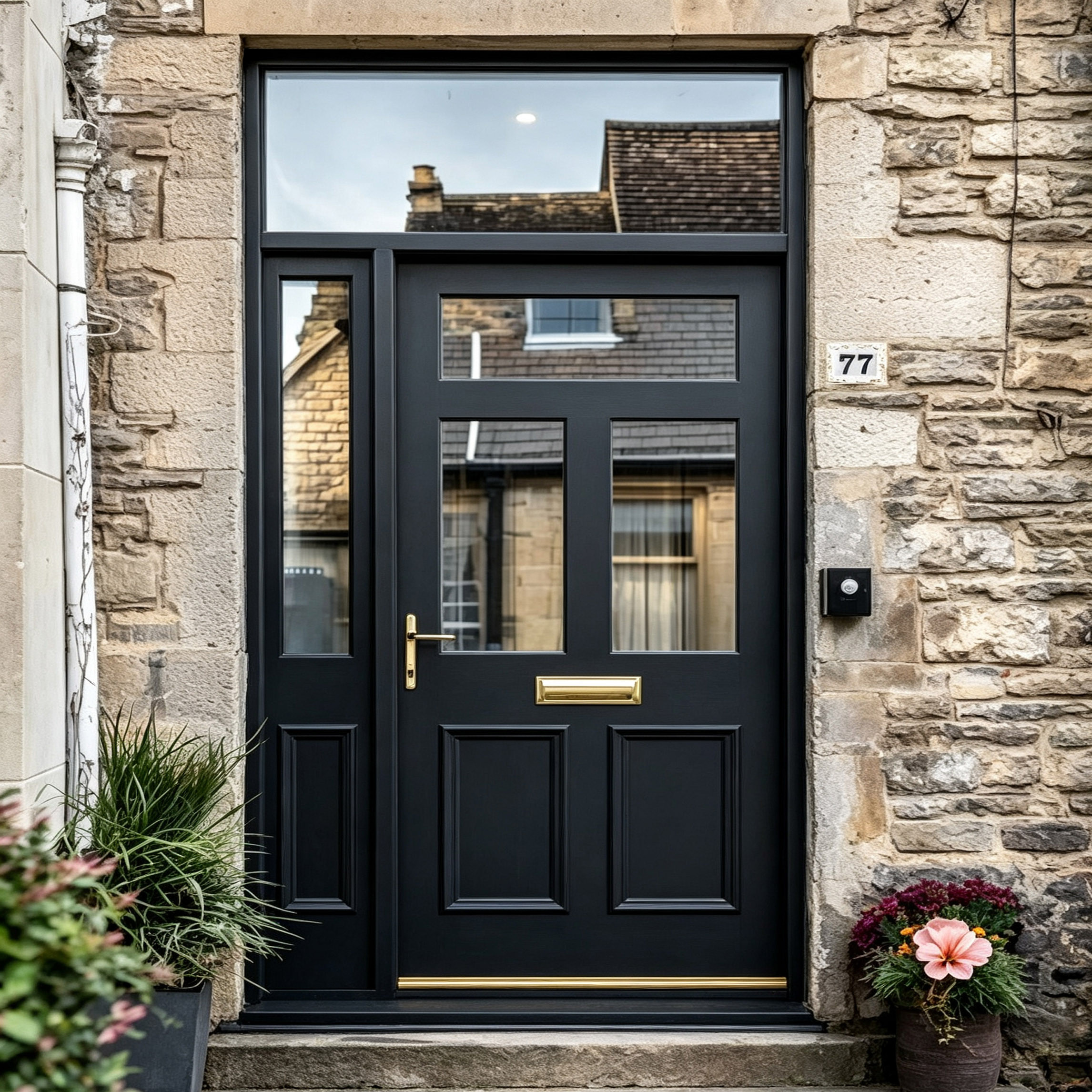
Glass is often the single most variable cost component. A door with no glass (solid panel) is the cheapest; a door with triple-glazed impact-rated Low-E glass can add $1,500 or more to the total. Here is the 2026 upgrade ladder:
| Glass Type | Added Cost | U-Value (approx.) | When to Choose |
|---|---|---|---|
| Single glazing | Base (included) | 5.0–5.8 W/m²K | Mild climates, interior doors, budget projects |
| Double glazing | +$200 – $500 | 1.8–2.8 W/m²K | Most residential entry doors in temperate climates |
| Double + Low-E | +$300 – $700 | 1.2–1.8 W/m²K | Cold or hot climates where energy code compliance matters |
| Triple glazing | +$600 – $1,200 | 0.6–1.0 W/m²K | Premium builds, Passive House, extreme climates |
| Impact-rated (laminated) | +$500 – $1,500 | Varies | Hurricane zones (FL, TX, SC coast), security-conscious buyers |
A practical rule of thumb: if your local building code requires a U-value below 1.6 W/m²K for exterior doors — and many codes now do — you will need at least double glazing with Low-E coating. If you are in a hurricane zone, impact-rated laminated glass is not optional; it is code. The cost of upgrading from single to double glazing is usually the best value-for-money decision in the entire door project, because it improves both energy performance and acoustic comfort for a relatively modest investment.
Beyond the glass type itself, two secondary upgrades can further improve performance. Argon gas fill between the panes of a double or triple-glazed unit adds roughly $50–$100 but improves the U-value by 10–15% compared to air-filled units. Warm-edge spacers — which replace the traditional aluminum spacer bar with a thermally insulated composite — add another $30–$80 but reduce condensation risk at the glass edge and improve the overall U-value by a small but measurable margin. Both upgrades are standard on Landran Door's thermal-break lines and are increasingly expected in energy-conscious markets.
Hardware Options and Their Price Impact
Hardware is where many homeowners are surprised by the cost spread. A basic hinge-and-lever set can cost as little as $50, while a premium concealed hinge system with a Grade A multi-point lock and smart lock integration can add $800 or more. The 2026 hardware cost ladder looks like this:
Standard hinges + tubular latch: $50 – $150. Adequate for light-duty residential use, but offers minimal security and no thermal break at the hinge point.
Multi-point lock (3–5 bolts): $200 – $500. Engages multiple bolts along the frame, dramatically improving forced-entry resistance and compression sealing.
Grade A multi-point lock (7–12 bolts): $400 – $800. Premium security with maximum sealing pressure; standard on Landran Door's premium line.
Smart lock integration: $300 – $800 on top of the mechanical lock. Includes pre-machined cavity, wiring harness, and compatible smart lock hardware (Yale, August, Samsung, etc.).
Concealed hinges + recessed pulls: $200 – $600. Aesthetic upgrade that hides all visible hardware; requires precision machining.
The honest recommendation from most security professionals: spend the money on a multi-point lock before you spend it on anything else. A $2,000 door with a $50 lock is easier to break into than a $800 door with a $400 multi-point lock. Hardware is not the place to cut corners.
Finish and Color Cost Variations
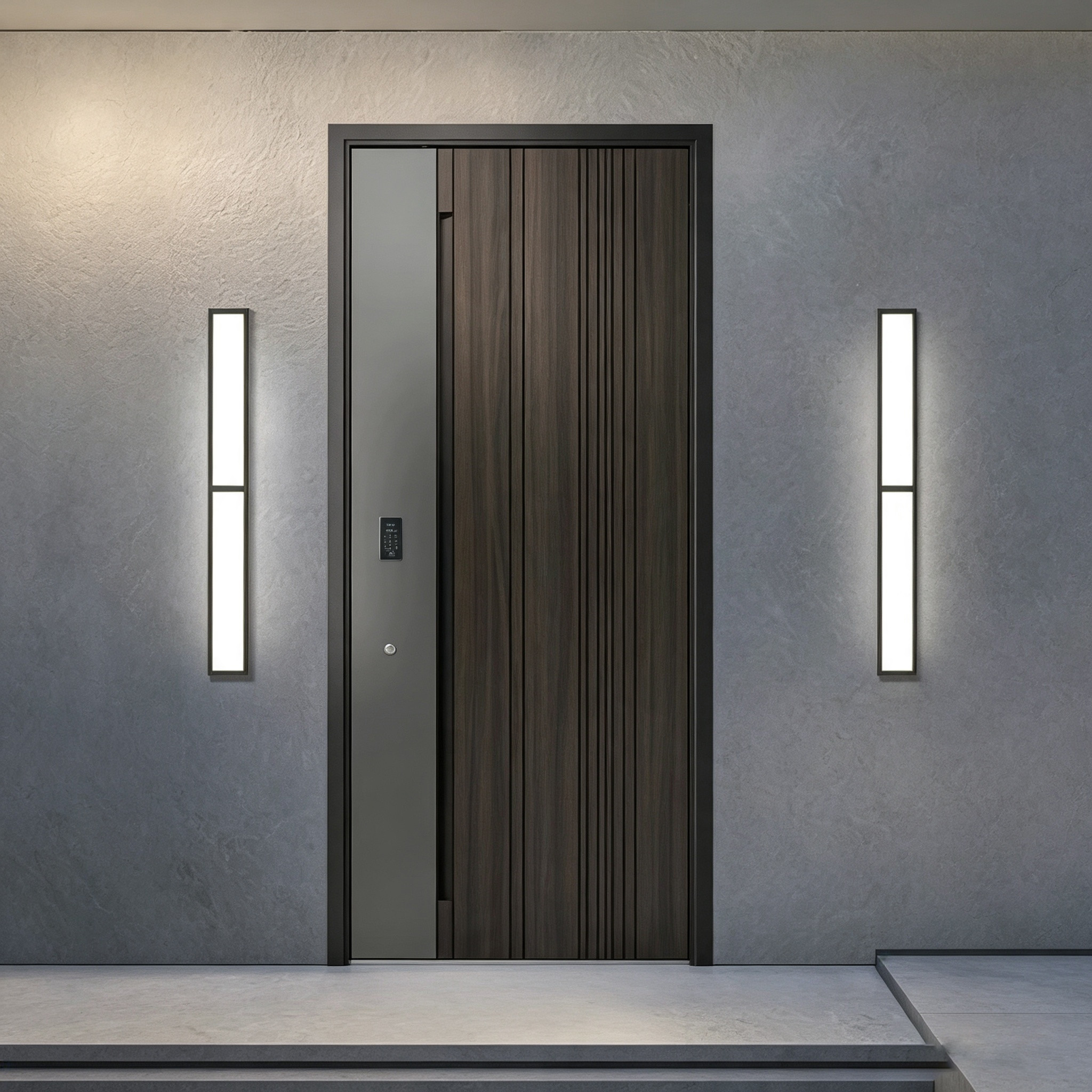
The finish on an aluminum door is not just about color — it is about durability, UV resistance, and maintenance frequency. The 2026 finish cost ladder:
| Finish Type | Cost Impact | Durability | Notes |
|---|---|---|---|
| Standard RAL powder coat | Base (included) | 15–20 yr | 30–50 popular colors in stock; polyester resin |
| Custom RAL powder coat | +$100 – $300 | 15–20 yr | Any of 213 RAL colors; batch-matched; adds 2–3 weeks lead time |
| Wood-grain sublimation | +$300 – $600 | 15–25 yr | Realistic timber look; 12+ patterns; dual-tone available |
| PVDF / Kynar coating | +$400 – $800 | 25–30 yr | AAMA 2605 rated; essential for coastal or high-UV environments |
| Anodized finish | +$500 – $1,000 | 30+ yr | Maximum corrosion resistance; limited color range (bronze, black, natural) |
| Dual-tone (exterior + interior) | +$200 – $500 | Same as base | Different finish on each face; ideal for matching interior and exterior palettes |
For most homeowners, a standard or custom RAL powder coat is the sweet spot of value and durability. If you live within 5 km of salt water, upgrade to PVDF — the UV and salt-spray performance difference is dramatic, and the premium pays for itself in maintenance savings within a decade. Anodized finishes are the most durable but are limited to metallic tones, so they work best on contemporary and industrial designs where a natural metal look is desirable.
Landran Door's 2026 finish program includes 213 RAL colors in matte powder coat as standard, 12 wood-grain sublimation options, PVDF coastal upgrade, and full dual-tone capability across the entire catalog. All finishes are applied in-house, which means tighter quality control and no subcontractor scheduling delays.
Installation Labor: What to Expect
Installation labor is the component most often underestimated by homeowners. A door that costs $1,500 at the factory can cost $2,500–$3,000 fully installed, and complex installations can push labor alone to $1,500 or more. The 2026 labor cost ranges:
Standard replacement (same size, existing opening): $500 – $800. Remove old door, install new door, trim, and seal. Half-day job for an experienced installer.
New construction (rough opening ready): $600 – $1,000. Includes flashing, threshold setting, and integration with weatherproofing.
Size change or structural modification: $1,000 – $1,500+. Requires framing work, header adjustment, and potentially drywall or siding repair.
Oversized / pivot door installation: $1,200 – $2,000+. Requires two or more installers, specialized lifting equipment, and precise floor/threshold work.
Smart door installation: Add $200 – $500 for electrical wiring, smart lock programming, and sensor calibration.
Factors that increase labor cost: masonry or concrete walls (drilling, anchoring), historical preservation requirements, difficult access (stairs, narrow streets), and coordinating with other trades (electrician for smart doors, glazier for custom glass). Always get a site-visit quote rather than a phone estimate — the condition of the existing opening is the single biggest variable.
Regional labor rates also play a significant role. In major metropolitan areas — New York, San Francisco, London, Sydney — expect installation labor to run 30–50% higher than the ranges listed above. In smaller cities and rural areas, labor may come in 10–20% below those ranges. Some manufacturers, including Landran Door, maintain a network of certified installers in major markets, which can simplify the coordination process and ensure the installation meets the manufacturer's specification. If you are buying factory-direct, ask whether the manufacturer can recommend or coordinate installation in your area — it is often cheaper than sourcing an independent contractor, and the warranty coverage is typically stronger when a certified installer handles the work.
Total Project Budget Examples
To make all of this concrete, here are three real-world project scenarios that represent the most common 2026 aluminum entry door installations. Each case shows how the individual cost layers stack up into a total budget.
Scenario 1: Budget Replacement — $1,400 Total
| Door unit (single, non-thermal, 36" × 84") | $600 |
|---|---|
| Single glazing (included) | $0 |
| Standard hinges + tubular latch | $80 |
| Standard RAL color (matte black) | $0 |
| Installation (standard replacement) | $600 |
| Miscellaneous (sealant, trim, hardware) | $120 |
| Total | $1,400 |
This is the entry point for aluminum entry doors. It is a perfectly functional door for a mild climate or a rental property where long-term energy savings are less of a concern. The trade-off: no thermal break means higher energy bills, and single glazing means less sound insulation.
Scenario 2: Standard New Build — $3,200 Total
| Door unit (single, thermal-break, 36" × 84") | $1,200 |
|---|---|
| Double glazing + Low-E | $500 |
| Multi-point lock (5-bolt) | $350 |
| Custom RAL color (sage green) | $200 |
| Installation (new construction) | $800 |
| Miscellaneous (flashing, threshold, trim) | $150 |
| Total | $3,200 |
This is the most common specification for new residential builds in 2026. It includes a thermal break for energy efficiency, double glazing with Low-E for code compliance and comfort, a multi-point lock for security, and a custom color for design coordination. At this price point, buying factory-direct from Landran Door would bring the door unit cost down to roughly $800–$900, saving $300–$400 on the same specification.
Scenario 3: Premium Pivot Door — $8,500 Total
| Door unit (pivot, thermal-break, 48" × 96") | $3,500 |
|---|---|
| Triple glazing + Low-E + Argon | $1,000 |
| Grade A multi-point lock (12-bolt) + smart lock | $1,000 |
| Wood-grain sublimation + dual-tone | $600 |
| Concealed hinges + recessed pulls | $400 |
| Installation (pivot, two installers) | $1,800 |
| Miscellaneous (structural prep, threshold, electrical) | $200 |
| Total | $8,500 |
This is the statement door — the kind that defines a luxury home's entrance. It combines an oversized pivot panel, triple glazing for maximum energy performance, top-tier security with smart lock integration, and a realistic wood-grain finish with a different interior color. At this tier, factory-direct savings are most dramatic: the same specification through a traditional supply chain could cost $11,000–$14,000. Landran Door's factory-direct pricing on this build would be approximately $6,500–$7,500 fully installed, a savings of $1,000–$2,000.
Factory Direct vs Supply Chain: Save 25–40%
The traditional aluminum door supply chain looks like this: manufacturer sells to a regional distributor, who sells to a local dealer or showroom, who sells to a contractor, who installs it for the homeowner. Each layer adds margin — typically 15–25% per layer — and by the time the door reaches the homeowner, the price has been marked up 40–80% above the factory gate price.
Factory-direct purchasing eliminates those layers. When you buy from a manufacturer like Landran Door, you are buying from the same facility that extrudes the aluminum, cuts the profiles, applies the finish, assembles the door, and tests it. The price you pay is the factory price plus shipping — no distributor margin, no showroom overhead, no retail markup.
Real savings example: A thermal-break double-door with double glazing and a multi-point lock that costs $3,200 through a traditional supply chain can be purchased factory-direct from Landran Door for approximately $2,000–$2,400 — a savings of $800–$1,200, or 25–37%.
The trade-off is that factory-direct buying requires more involvement from the homeowner or contractor: you need to specify the door accurately, coordinate shipping, and arrange installation separately. But for anyone comfortable managing a construction project — or working with a contractor who is — the savings are real and significant. Landran Door provides specification support, engineering drawings, and installation guides to bridge the gap, and their project inquiry channel connects you directly with a technical specialist who can help you configure the right door at the right price.
The quote process itself is straightforward. You provide the rough opening dimensions, your preferred configuration (single, double, pivot), the glass type, the finish color, and any hardware preferences. The manufacturer returns a detailed quote that includes the door unit, glazing, hardware, finish, and shipping — typically within 24–48 hours. This quote is itemized, so you can see exactly what each component costs and make trade-offs if the total exceeds your budget. Compare this to the typical retail experience, where you are shown a single bundled price with no visibility into the component breakdown, and the advantage of the factory-direct model becomes clear.
FAQ: Aluminum Entry Door Cost
How much does a standard aluminum entry door cost in 2026?
A standard single aluminum entry door costs $800–$1,500 fully installed for a basic non-thermal model, and $1,500–$4,000 for a mid-range thermal-break model with double glazing and a multi-point lock. Premium and oversized doors range from $4,000 to $10,000+. The biggest cost variables are glass type, door size, finish customization, and installation complexity.
Is a thermal-break aluminum door worth the extra cost?
Yes, in almost any climate with a heating or cooling season. A thermal-break profile costs 40–60% more than a non-thermal equivalent at the unit level, but it reduces heat transfer by 60–70%, which translates to measurable energy savings. In most climates, the thermal-break upgrade pays for itself within 5–8 years, and it is increasingly required by building codes in cold and hot regions.
How much does installation add to the total cost?
Installation labor typically adds $500–$1,500 per door, depending on the complexity. A standard same-size replacement is $500–$800; new construction is $600–$1,000; structural modifications or oversized pivot doors can reach $1,200–$2,000+. Always get a site-visit quote, because the condition of the existing opening is the biggest variable.
Can I save money by buying factory-direct?
Yes. Buying factory-direct from a manufacturer like Landran Door typically saves 25–40% compared to traditional supply chain pricing, because it eliminates distributor, showroom, and retail markups. The trade-off is that you need to specify the door accurately and arrange installation separately, but manufacturers like Landran provide specification support and installation guides to help bridge that gap.
What is the most cost-effective glass upgrade?
The upgrade from single to double glazing is the best value-for-money decision in most door projects. For $200–$500, it improves both energy performance and acoustic comfort significantly. Adding Low-E coating ($300–$700 total) is the next best value, especially in climates with extreme temperatures. Triple glazing and impact-rated glass are premium upgrades that make sense for specific performance requirements, not for general cost savings.
How much does a custom color or finish add to the cost?
A custom RAL powder coat color adds $100–$300. Wood-grain sublimation adds $300–$600. PVDF (Kynar) coating for coastal environments adds $400–$800. Anodized finishes add $500–$1,000. Dual-tone (different finish on each face) adds $200–$500 on top of the base finish. For most projects, a standard or custom RAL powder coat is the sweet spot of value and durability.
What is the total cost of ownership over 30 years?
Aluminum entry doors have very low lifetime maintenance costs compared to wood or steel. Over 30 years, a quality thermal-break aluminum door with a PVDF or powder-coat finish requires essentially zero maintenance beyond cleaning, while a wood door would need 6–10 refinishing cycles at $300–$600 each. Factoring in energy savings from thermal-break technology, the total cost of ownership of an aluminum door is typically 30–50% lower than wood over a 30-year horizon.
The Bottom Line on Aluminum Entry Door Costs in 2026
The cost of an aluminum entry door in 2026 is driven by choices, not mysteries. The tier you select — Basic, Mid-Range, or Premium — sets the framework, but the individual decisions about glass, hardware, finish, and installation are what determine where you land within that range. By understanding each cost layer, you can make trade-offs that fit your budget without compromising on the things that matter most: security, energy performance, and durability.
If you want to see exact pricing for your specific configuration, Landran Door offers free project quotes through their inquiry page or contact channel. Their technical team can help you compare specifications, understand the cost implications of each upgrade, and find the configuration that delivers the best value for your project — at factory-direct pricing that is typically 25–40% below traditional supply chain costs.